
What ASX Reveals About Leadership, Resilience and Deferred Risk
The ASX inquiry shows how leadership failures often build through rational decisions, deferred investment and risks that become normalised before they become public.
Share this article:
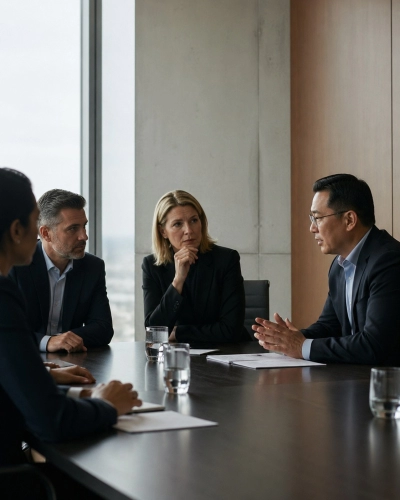
ASX and the leadership cost of treating resilience as a cost centre.
What's Happening
Australia’s corporate regulator, ASIC, has published the final report from its inquiry into the Australian Securities Exchange. The inquiry focused on governance, capability and risk management across ASX, following years of operational failings and technology problems. ASIC’s stated observations included that resilience of critical market infrastructure had been compromised to deliver high shareholder returns, governance arrangements had not given sufficient focus to critical infrastructure, and risk management needed to be more embedded in day-to-day decision-making. (ASIC)
What's Being Said
Reuters reported that the inquiry described ASX as having an “insular and defensive” culture and using short-term tactical fixes rather than addressing root causes. ASX chair David Clarke said the report had held up “a mirror” to the organisation and pointed to new executives, board members and increased capital expenditure to improve resilience. S&P Global Ratings subsequently downgraded ASX from AA-/A-1+ to A+/A-1, citing governance and risk failures, while saying further improvement would depend on the delivery of the risk and governance upgrade programme. (Reuters)
What I've Noticed
The leadership signal here is not a technology failure. It is what happens when organisations quietly reward performance today while underfunding resilience tomorrow. In boardrooms, this rarely presents as neglect. It presents as sequencing, prioritisation, capital discipline and “good enough for now”.
The hard question is not whether the risk has been recorded. The hard question is whether the board has made a conscious decision to live with it, with full visibility of the consequence.
Pressure Test this:
Ask the executive team to name the risk that has been repeatedly described as “manageable”. Then ask what would have to fail for the board to admit it was actually under-owned.
Read more blog posts
11 May 2026
When Strong Leadership Becomes Organisational Dependency
The JPMorgan governance debate is not just about separating chair and CEO roles. It reveals a wider boardroom risk: strong performance can make dependency harder to challenge.
17 Aug 2026
Perhaps the safest way to use AI is to learn how to disagree with it
AI can improve visible performance faster than the judgement supporting it. Emerging research suggests the effect depends partly on how much thinking people continue to do for themselves.
Get in touch
We want to hear from you
If you're ready to break bias, decode decisions and unlock success, we're here to help. Let's get your transformation journey started!