
Why Rising Commercial Insurance Costs Are a Board-Level Leadership Signal
As insurers tighten cover and reprice risk, businesses are being forced to own exposures they once transferred. The real issue is not insurance cost, but leadership’s understanding of operational risk.
Share this article:
Commercial insurance is becoming a leadership signal, not just a cost line.
What's Happening
Insurers are becoming more selective about property and climate-related risk. EIOPA has warned that in high-risk areas insurance may become unavailable as insurers withdraw cover or introduce exclusions. Aon’s latest market view also points to sharper underwriting discipline, even where parts of the commercial insurance market remain competitive. (EIOPA)
What's Being Said
The market explanation is that this is about climate losses, reinsurance costs, catastrophe modelling, and risk repricing. That is true, but incomplete. The more useful signal is that risk once transferred away from the business is now being pushed back onto the balance sheet. (SEI)
What I've Noticed
Insurance has quietly been acting as a buffer between operational reality and board-level accountability. That buffer is thinning.
When cover becomes more expensive, narrower, or conditional, leadership teams are forced to confront risks they may not have properly owned before. Site resilience, asset quality, supply chain exposure, business interruption, and continuity planning stop being technical risk topics. They become capital allocation and governance questions.
The first instinct will be to treat this as a procurement problem. Negotiate harder. Rebroker the policy. Accept a higher excess. Reduce cover.
That misses the point.
When insurers reprice or restrict cover, they are giving the organisation an external view of its risk profile. Boards should pay close attention to that signal. It may reveal fragility that internal reporting has normalised.
The real leadership issue is not the premium increase. It is whether the executive team understands the risks it is now being asked to carry.
Read more blog posts
01 May 2026
South East Water and the Governance Risk Behind Operational Failure
South East Water’s leadership crisis shows how operational failures become governance failures when boards tolerate weak signals, delayed investment and repeated reassurance without visible progress.

06 May 2026
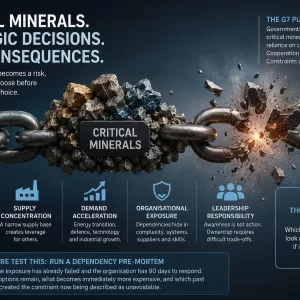
Critical Minerals and the Leadership Risk of Strategic Dependency
The G7’s critical minerals push reveals a boardroom issue beyond supply chains: organisations often tolerate known dependencies until events turn them into strategic constraints.
02 Jun 2026
What employee surveys reveal about executive coaching, pressure and leadership range
Microsoft employees reportedly feel more energised and empowered, yet less positive about coaching, feedback and motivation from managers. The deeper signal is how sustained pressure narrows leadership range before performance visibly drops.
Get in touch
We want to hear from you
If you're ready to break bias, decode decisions and unlock success, we're here to help. Let's get your transformation journey started!